
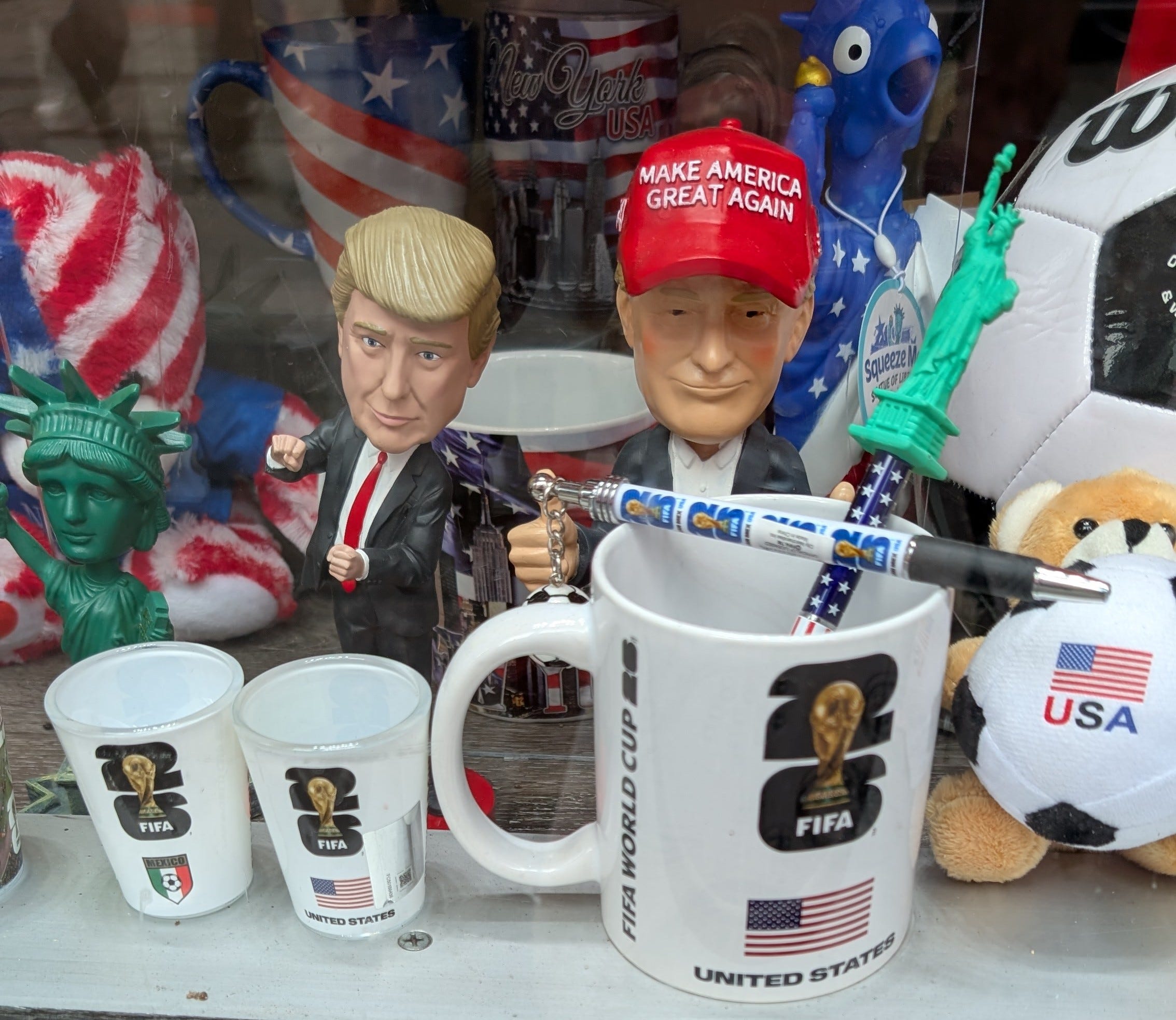
As it gets going, really gets going, the World Cup, as it plays out on the field, in the games and in the host cities, will be good, likely great.
Because it’s the World Cup!
There have already been some great stories during the group stages as the tournament gears up for the drama of the knockout play, with potential for extra upsets and sporting stories as it’s the first time it features a knockout round of 32.
This is why the World Cup works so well as a sportswashing tool. Regardless of the political issues, logistical concerns, or problems related to a host country, it’s almost guaranteed that, at the conclusion of the tournament, the organisers will be able to point to the football itself and the stories it creates and say it’s been a success.
This then helps those who want to shift all the serious issues surrounding a tournament, that mostly occur away from the football, into the background — something that has happened to various extents at numerous sporting events over the years, including previous World Cups.
The elements of the 2026 tournament that will likely be a success — the sporting achievements, their narratives, the spectacle, and the mixing of host and visitor cultures — will be so despite Gianni Infantino and despite the US government, not because of them.
And any success doesn’t mean that the numerous issues emerging before and during this tournament should be swept under the carpet.
Stadiums
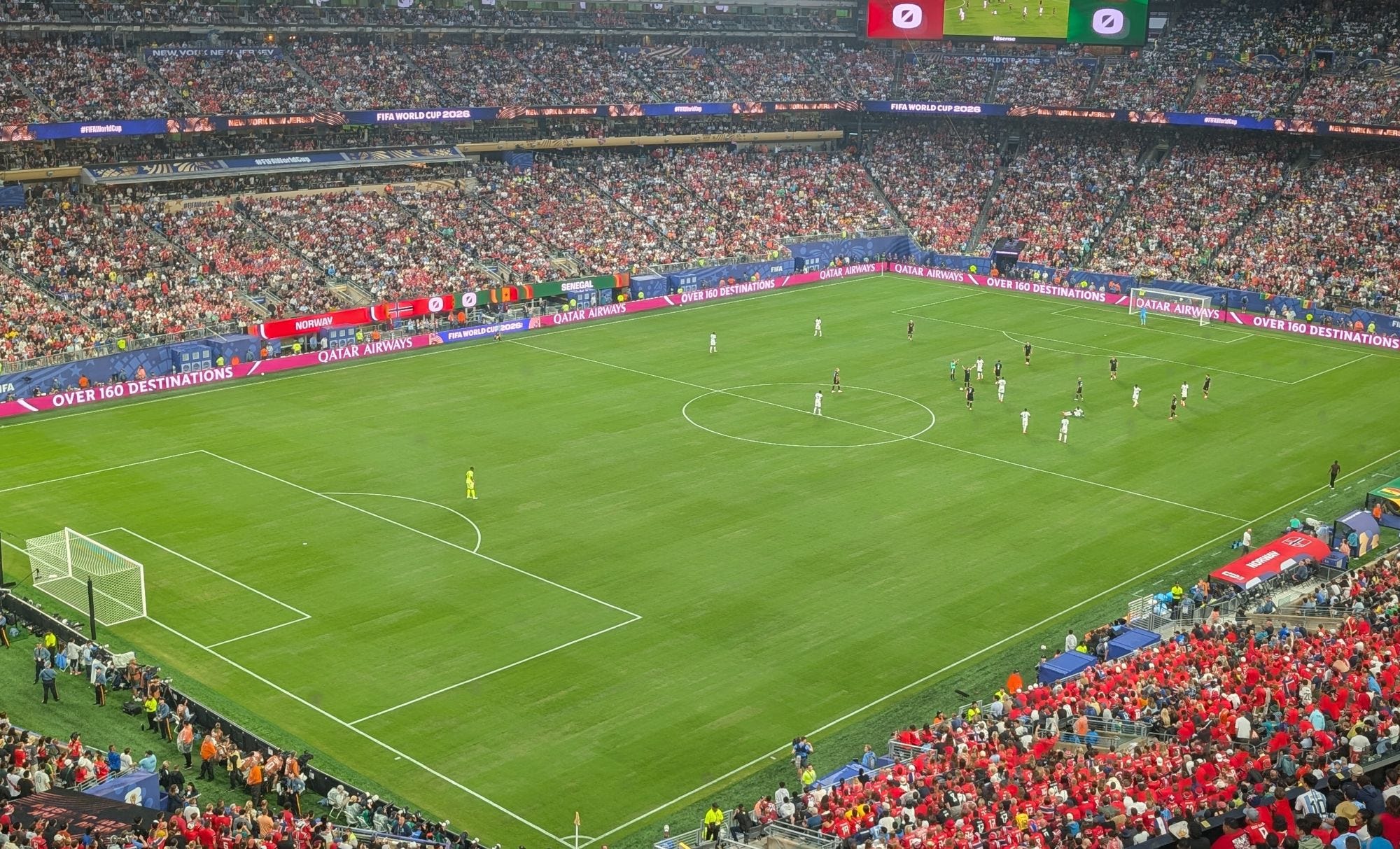
The stadiums themselves will be fine, despite some pre-tournament worries and despite some groans about the final venue. They’ll end up being a positive aspect as the knockout rounds approach.
The real issue in this area is FIFA’s ticket pricing, not the stadiums themselves.
Though all of the World Cup venues in the US are NFL arenas rather than soccer stadiums, they are impressive sporting theatres nonetheless.
Their usual use for a distinctly American sport adds an element of host nation flavour for this particular co-host. Embracing the quirks of a host country is part of what can make World Cups so memorable, as was the case the last time the US hosted in 1994. The spectacular, sumptuous stadiums contribute to this as it co-hosts with Canada and Mexico in 2026.
In terms of the playing surfaces, there have been some complaints about the venue in New Jersey, but overall, the pitches, with grass laid in place of artificial turf months ago, should endure better than those questionable temporary grass fields used in warm-up matches at non-World Cup venues.
Why Is There Still Negativity?
Football always has the potential to cut through any problems, as it has done many times throughout history. The beautiful game can charm like few others, which is what makes the World Cup the biggest and potentially the most charming sporting event.
This can lead to the idea that any negativity that precedes a World Cup is somehow made to look like a bad prediction — a needless worry that didn’t transpire during the tournament. But the football being good doesn’t erase the surrounding issues, even if it can make it easier to ignore them.
The previous World Cup, in Qatar in 2022, was also controversial, fraught with issues, including around human rights and the working conditions of the migrant workers who built the stadiums and surroundings that made it such a pleasant experience for many who attended.
Then Messi lifted the World Cup for the first time, and that, rather than any of the serious problems, became the lasting image.
Tickets & Organisation
One of the worries ahead of the games in the United States was that the extortionate ticket costs, dynamic ticket pricing, and the legalised, almost encouraged, ticket touting/scalping via resale sites, including FIFA’s own official platform, would lead to unsold tickets and/or flat stadium atmospheres.
Though there have been empty pockets of seats here and there, the uptake on tickets, despite the extortionate prices, will be considered a success and could sadly encourage similar practices at future tournaments.
Unlike at the Club World Cup, there was never going to be any problems selling tickets at the Actual World Cup, but that doesn’t mean the extortionate costs that price out many fans and exploit many who can just about afford it, are warranted.
Excusing the prices by pointing out that most tickets were sold and games were well attended sets a bad precedent for the future of a game that is supposed to be for the many, not the few.
FIFA
World Cups are massive events and are not easy to organise. There will be people at FIFA whose names you never hear who work to ensure that these huge tournaments happen at all and somehow get it all to function with relatively few hitches.
Those working in and around the stadiums, from volunteers to FIFA staff, are unheralded and help the tournament run smoothly at ground level.
The problem is, at the top level, there are people making important decisions, both at FIFA and in the US as a host country, that have negatively affected fans from around the world, and therefore the tournament itself.
A large group of wealthy Norwegians may be able to help sell out The New York New Jersey Stadium In East Rutherford New Jersey, but fans of their opponents from Senegal were not able to travel to the US at all, even if they could afford tickets.
Most of the large Senegalese contingent based in New York City couldn’t afford tickets for the game there against Norway, either, and watched it back in Le Petit Sénégal area of Harlem, which is why the European team outnumbered their African opponents in the stands.

Iran, meanwhile, faced endless problems as they navigated a World Cup in a nation that is currently at war with their own.
They have faced numerous forced travel plans and had to move their training base at the last minute as the tournament began. Even if some other teams may also choose to travel straight after games, that has been their choice. Iran hasn’t had one.
It’s not a stretch to say that their treatment by the US as tournament co-hosts affected their ability to qualify for the knockout rounds, after they missed out by the narrowest of margins.
“I’m just glad they’re done, and they’re not coming back,” US Homeland Security secretary Markwayne Mullin said after Iran’s elimination from the tournament.
“I was so happy when we were able to pull their visas and said they could leave the U.S. soil, and I might’ve sung a song or two or maybe even danced a happy dance.”
If a qualified World Cup nation is such an inconvenience to a host nation, maybe that host shouldn’t be hosting the tournament in the first place.
Any fans from Iran were unable to travel to the tournament, as were those from Haiti, Senegal, and Ivory Coast.
One famous fan, DR Congo’s “Lumumba Vea”, was able to take his place in the stands at their game in Mexico towards the end of the group stages after quarantining in Belgium for the required period due to the Ebola epidemic back home. However, he was turned away from the US for DR Congo’s big game in Atlanta, and had to make his way back home, missing out on their historic qualification for the knockout phase.
Can a World Cup where one team is highly disadvantaged due to travel restrictions when entering a host country be considered a success?
Can a World Cup where fans from several countries have been unable to travel due to visa issues when entering that same host country be considered a success?
Can a World Cup where fans have been deliberately exploited with extortionate ticket prices by the organiser be considered a success?
Influencer-led Sportswashing
World Cups are inevitably good, which is what makes them such a good tool for a form of whitewashing now known as sportswashing.
In the case of the 2026 tournament, the World Cup has served as a tool for FIFA to extract money from fans and use the host nation to do so.
If there are forms of sportswashing at this World Cup, they have been seen in FIFA itself using the sport to excuse its actions on ticket prices, and possibly in the influencer-led promotions of US commercialism.
The latter example has seen idyllic views of US travel posted to millions on social media while ignoring the negative aspects that proper travel journalism should include.
If this kind of non-critical media output were seen at previous World Cups in Russia or Qatar, it would 100% be viewed as sportswashing, or as the propaganda of an authoritarian state, and there’s an element of that in the US with these paid promotions.
One social media user was invited to meet Donald Trump at “The Great American State Fair,” and his coverage has been used on the official channels of Trump’s administration to promote it.
Not that the US government and Trump are participating in a sportswashing exercise. Quite the opposite, if anything.
The Department of Homeland Security responds to US victories with nationalism reminiscent of far-right regimes of the past, posting phrases like “our soil” and “built the wall” after US victories.
US nationalist politics and policy are enforced for all to see, but on a local level, cities like New York and Seattle, which have democratic socialist mayors, have stood out against the general oppressive, exclusive atmosphere surrounding some of this World Cup by trying to make it as inclusive as they can.
The US and Fan Culture
The genuine joy of this tournament, as in many other World Cups, occurs when the fans of the countries involved mix with the residents of the host regions, and their cultures combine to produce a unique communion.
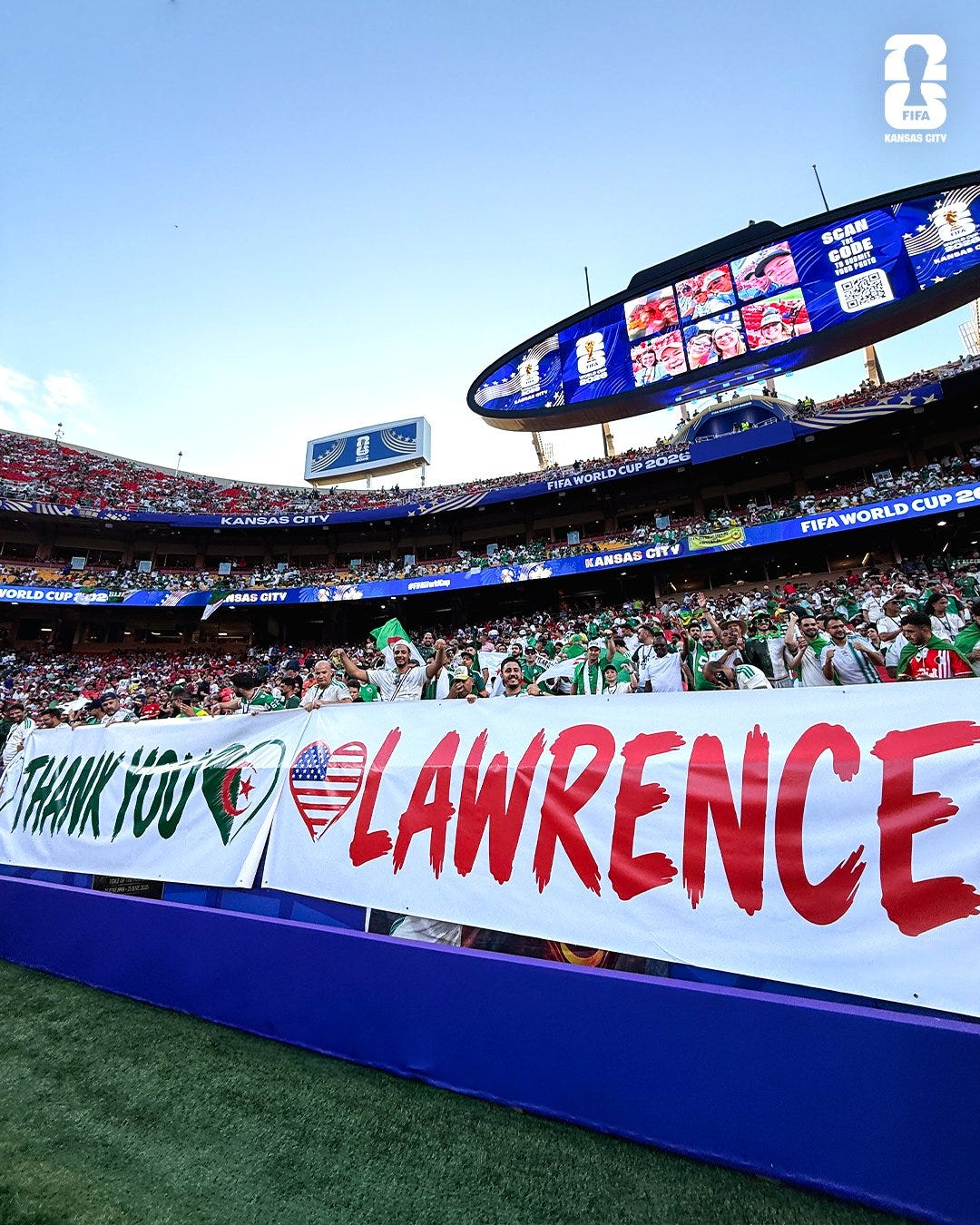
A couple of examples of that at this tournament were the Scotland fans in Boston and the Algeria fans in Lawrence, Kansas. In their final group game, Algeria fans displayed a banner saying “Thank you, Lawrence.”
America is a great country to visit and undoubtedly has a great setup for a World Cup, and indeed sports in general. It’s a geographical marvel and a cultural melting pot that belies the ideas of those in the White House who would prefer it not to be thus.
Immigration is one of the reasons the World Cup will be a success here, too, with its cosmopolitan cities producing pockets of interest in pretty much all of the 100+ games in one way or another, somewhere, by someone.
Yet the tournament has taken place against a backdrop of anti-immigration scaremongering and an inability of some fans to even travel to it.
That, combined with the cost of tickets, has made a tournament that should be the most inclusive in the world an exclusive event.
As there is talk of hosting another World Cup here in the future, and perhaps one that is expanded to 64 teams, it is worth remembering how difficult it has been for many fans to attend, and in some cases impossible due to travel bans, even if they could afford it.
A 64-team World Cup would introduce more countries that are on the US travel ban list, and create more issues when it comes to the movement of players, staff, officials and fans from various nations. If the US was the sole host of the 2026 World Cup, Iran likely wouldn’t have been able to take part at all.
As we see all the success stories, enjoy the genuine moments of joy produced by the players and supporters, and take in the grand sights, cities and stadiums of the USA, it’s worth remembering that a World Cup that is so prohibitive and exclusive cannot be considered a successful World Cup. Being able to welcome the world is one of the fundamental requirements for a successful World Cup, and the USA has been unable to meet that requirement.