
The continent of Africa boasts some of the best and most unusual national flags in the world.
These flags add colour to any games or tournaments organised by the Confederation of African Football (CAF), and a look below the surface can reveal plenty about the history of African nations and their fight for independence.

The social and political aspect of football has been especially prominent at the 2025 Africa Cup of Nations, thanks mostly to DR Congo supporter Michel Kuka Mboladinga, who raised awareness of one of Africa’s greatest revolutionary leaders.
In this spirit, and on the back of an ad hoc “AFCON flag of the day” social media series, here’s a lighthearted ranking with serious backstories that begin to reveal important moments in the history of the African continent.
5 - Sudan
Sudan is in the midst of the world’s worst ongoing humanitarian crisis, affecting more than 25 million people.
I wrote about this in more detail here in a Morning Star newspaper column.
As a result, Sudan has been playing its recent AFCON and World Cup qualifying home games in Libya.
A couple of the nation’s biggest club sides, Al Merrikh and Al Hilal, played their domestic league football in Mauritania last season, leading to the unusual occurrence of the Al Hilal club from the Sudanese city of Omdurman topping another country’s domestic league in 2025.
As a guest team, they were not awarded the title, meaning second-placed Mauritanian club, FC Nouadhibou, claimed the league trophy for the eighth consecutive season, but it was still a notable achievement for the team from Omdurman.
For the 2025/26 season, Al Hilal and Al Merrikh will compete in the Rwandan Premier League. Al Hilal currently sit atop the league table, with the potential to make more history in 2026.
The Sudan men’s national team won AFCON on home soil in 1970, just months before the flag was changed from the old blue, yellow, and green version, shown below.
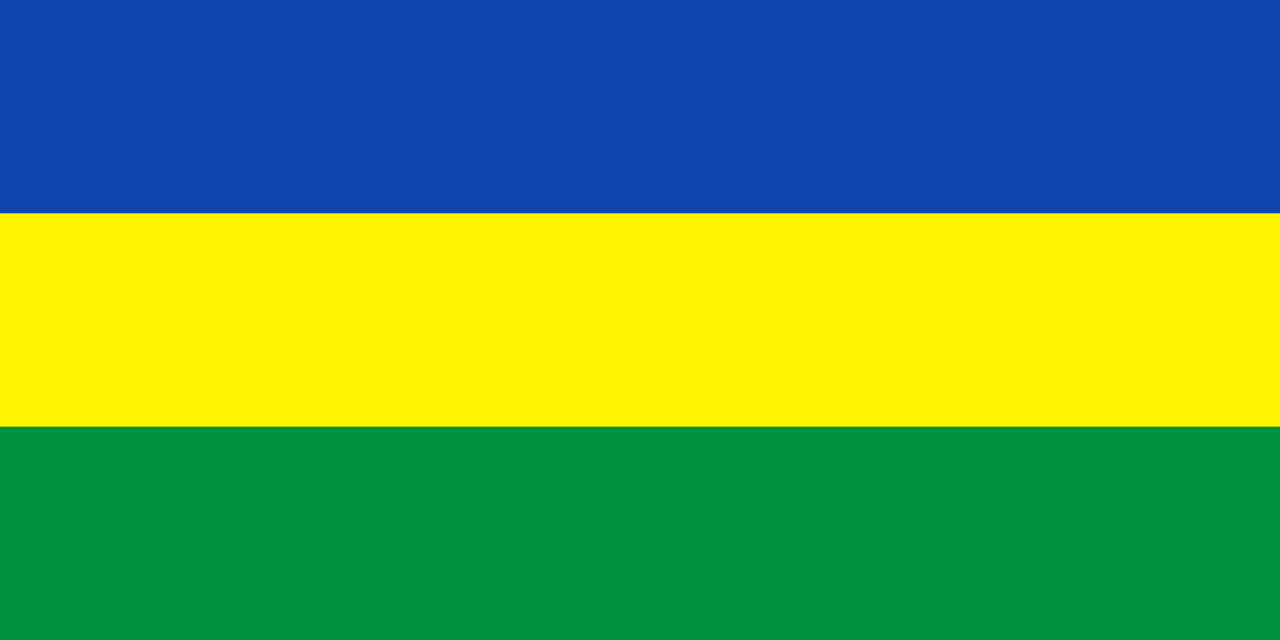
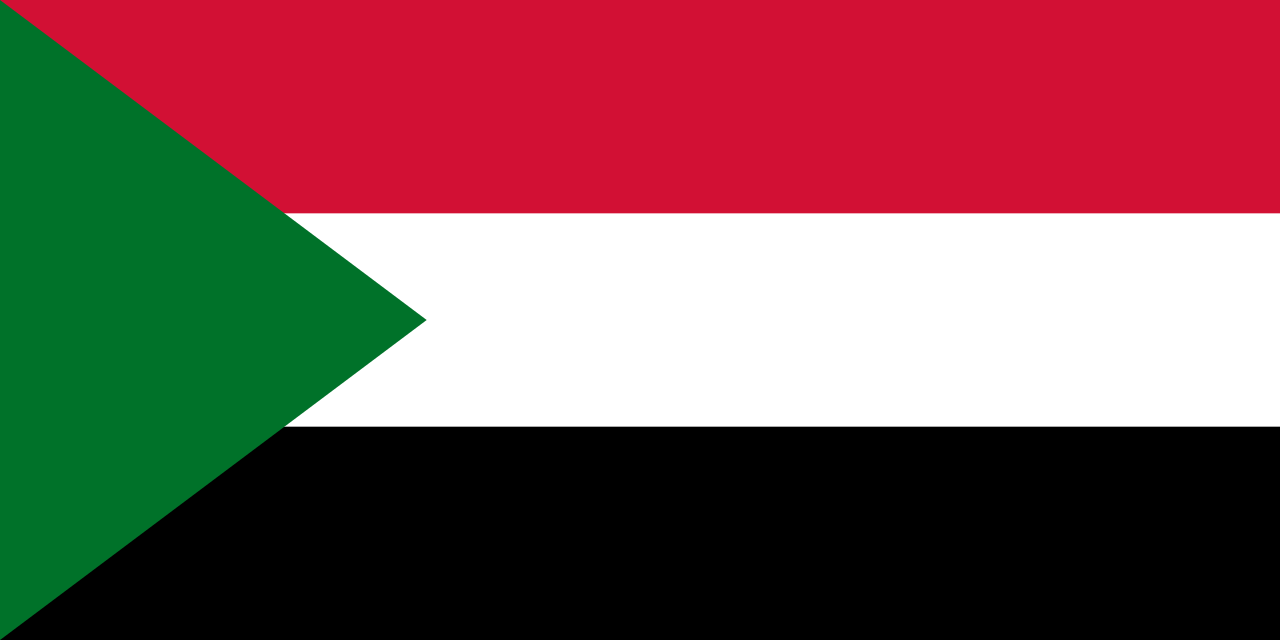
Since May 1970, Sudan’s flag has used the pan-Arab colours of red, white, and black based on the flag of Egypt, with additional green triangle to complete the colours representing Arab liberation.
4 - DR Congo
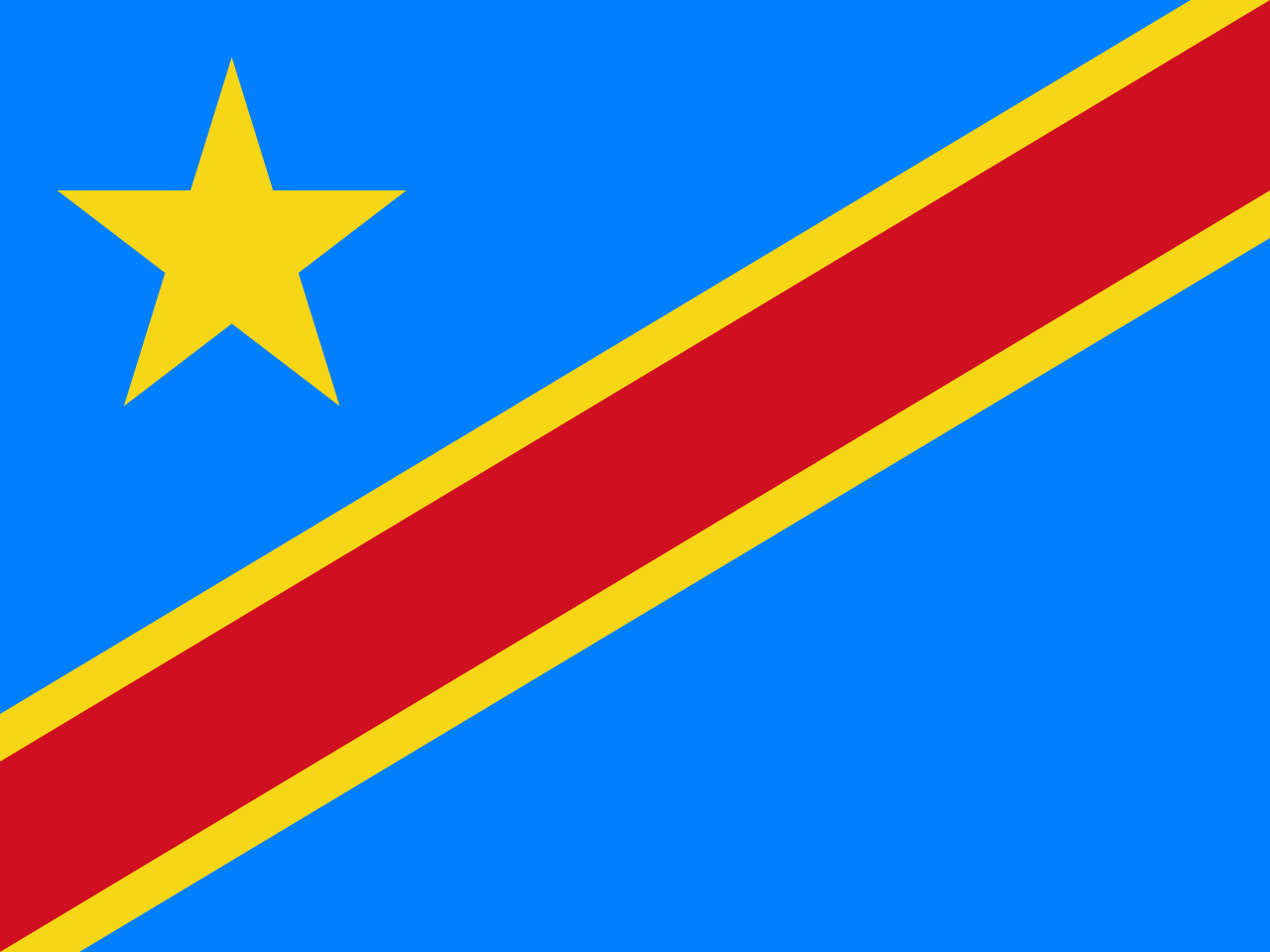
Throughout each of their games at AFCON 2025, DR Congo supporter Michel Kuka Mboladinga replicated the stance of Patrice Lumumba, a Congolese revolutionary who was a key figure in African and Congolese independence.
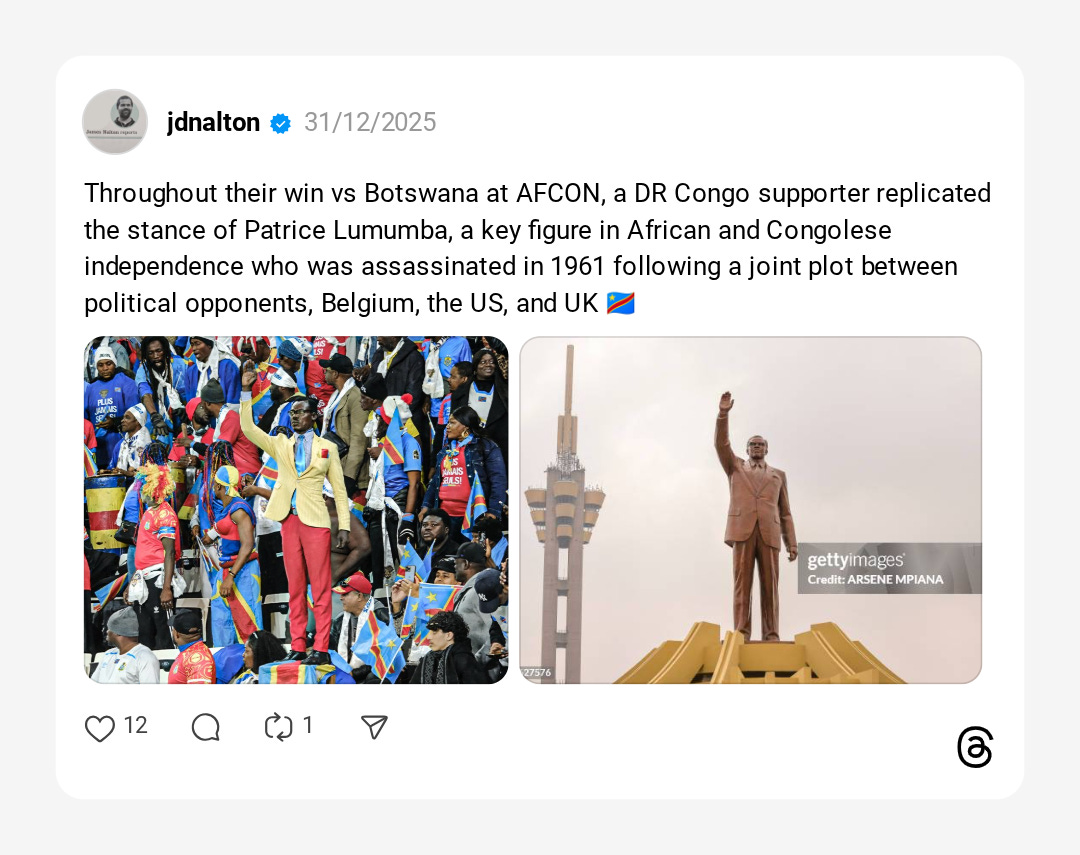
Lumumba was assassinated in 1961 following a joint plot between political opponents, Belgium, the US, with support, or at least not opposition, from the UK.
As Mboladinga went viral, it increased awareness of Lumumba and what he stood for, ensuring this AFCON delivered an important history lesson and further exposed the history of US interference in foreign countries, which continues to this day.
3 - Uganda
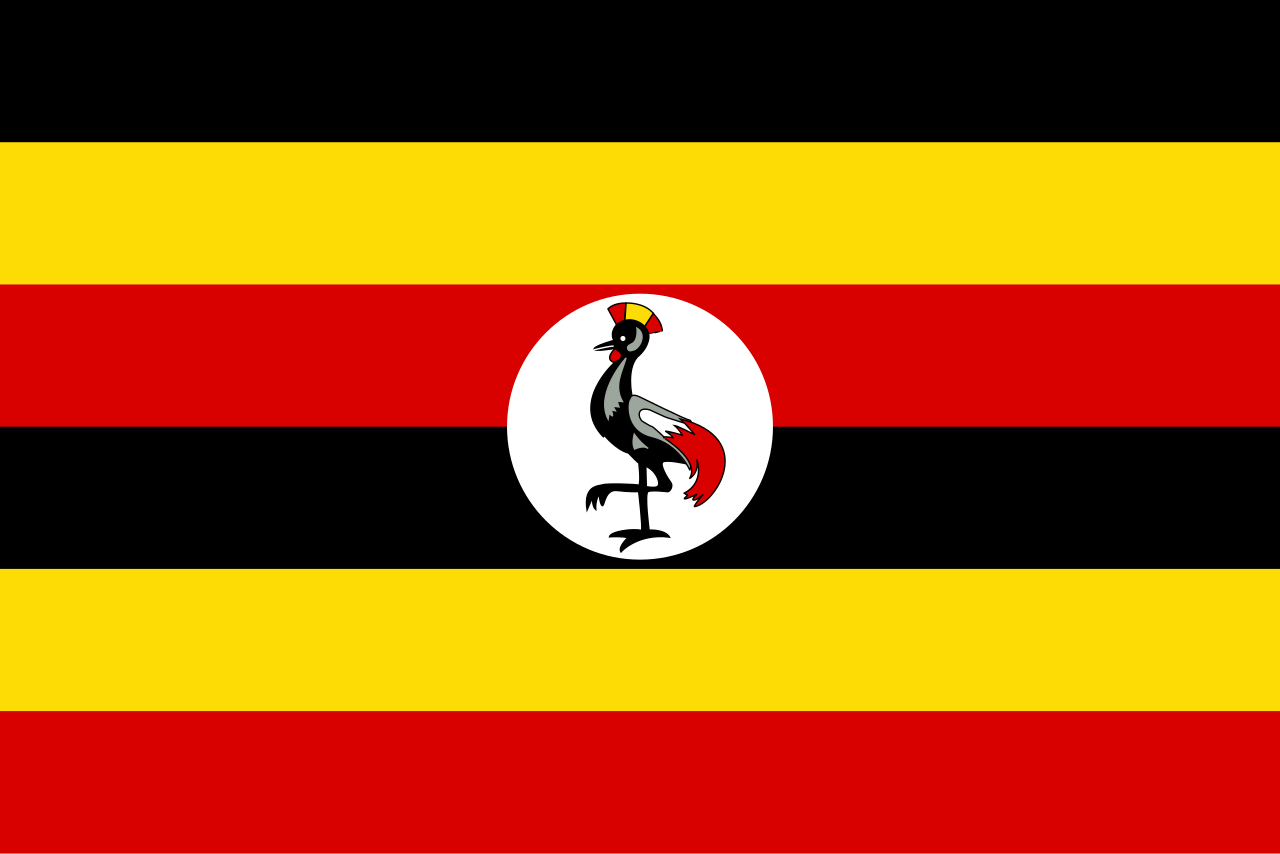
Uganda failed to win a game at this AFCON, but can take some solace from the fact that they have one of the best flags in the world.
The bird featured in the centre is the Grey Crowned Crane, the national bird of Uganda, depicted stepping forward to represent progress.
The men’s and women’s national teams are named after it via their respective nicknames, the Cranes and the Crested Cranes.
2 - Angola
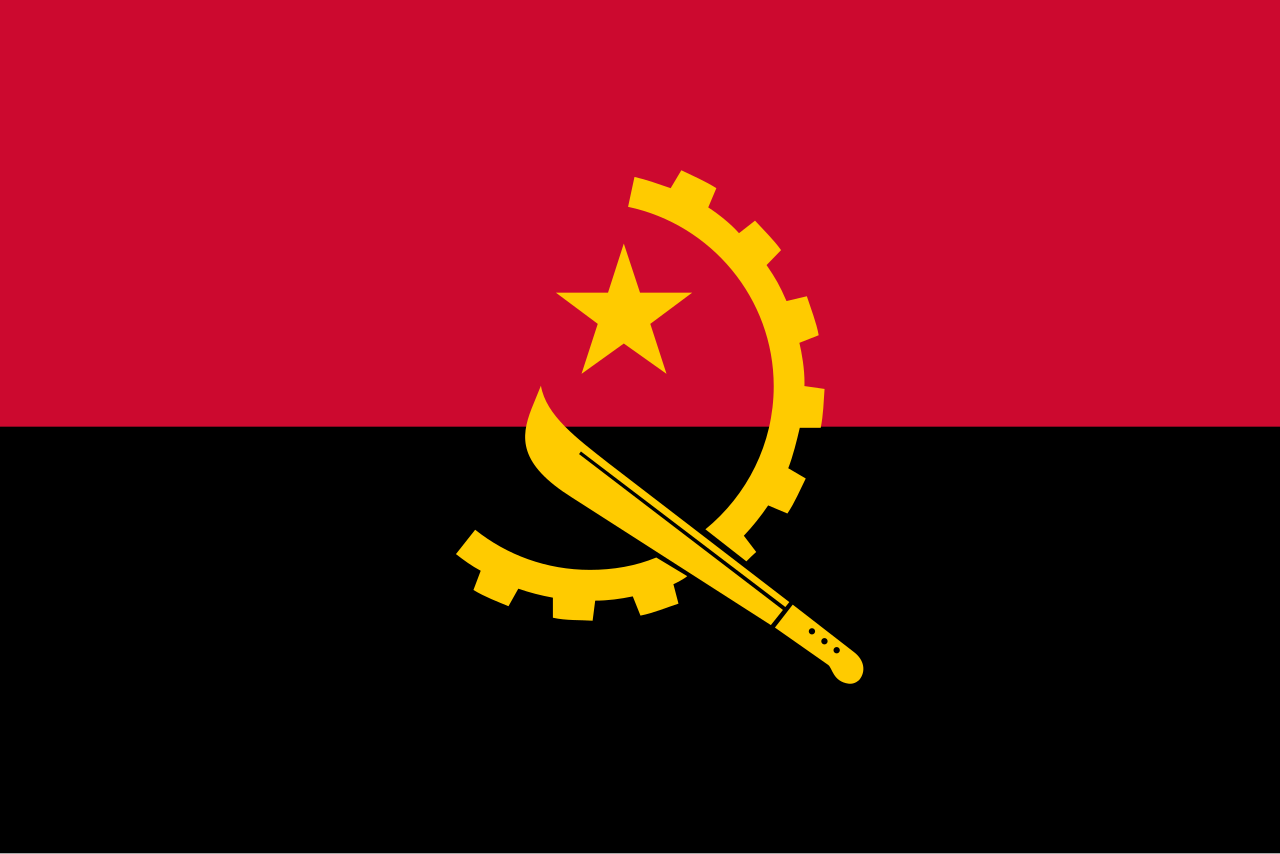
The first of two Soviet-looking flags at the top of this ranking, with the hammer and sickle replaced by a cog and machete.
The constitution of the Republic of Angola states that the bright red represents the blood shed by Angolans during the period of colonial oppression, the national liberation struggle, and the defence of the country. Black represents the African continent.
The cog wheel symbolizes the workers and industrial production, while a machete symbolizes peasants, agricultural production, and the armed struggle.
The star is to symbolize international solidarity and progress.
A striking, no-nonsense design with plenty of meaning and symbolism, putting it in the elite tier of world flags.
1 - Mozambique
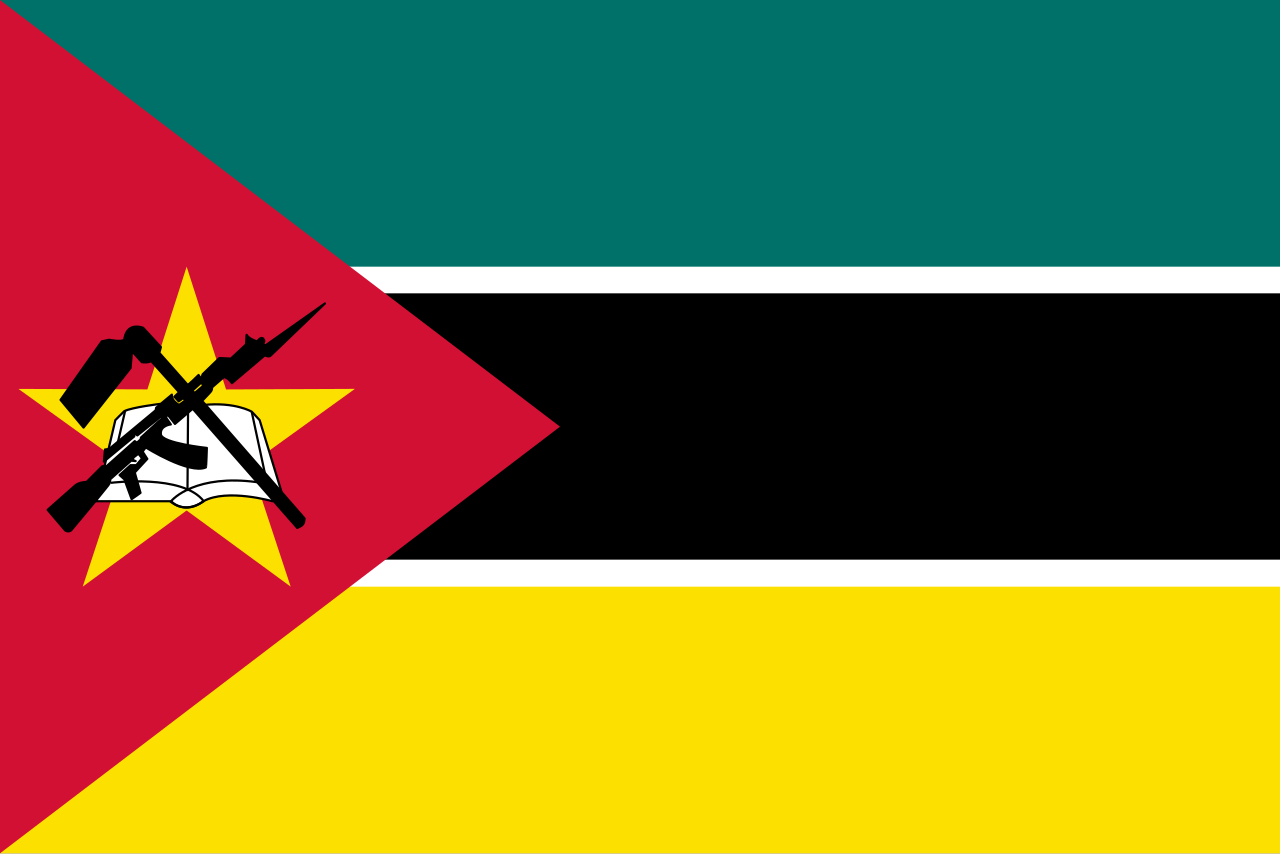
There is plenty going on in the flag of Mozambique.
It contains both sets of pan-African colours — the green-yellow-red based on the Ethiopian flag (as Ethiopia was considered the African country most resistant to colonization) and the red-black-green of the Pan-African (capitalized) movement centred around black liberation.
Mozambique has adopted this combination of colours as part of its own story, and in its constitution states the following meaning:
The significance of these colours shall be as follows:
a) red – the centuries of resistance to colonialism, the armed national liberation struggle and defence of sovereignty;
b) green – the riches of the soil;
c) black – the African continent;
d) gold – the riches of the subsoil;
e) white – the justice of the struggle of the Mozambican people, and peace.
The star shall symbolise the spirit of international solidarity of the Mozambican people.
The book, the hoe and the gun shall symbolise study, production and defence.
A CIA description of the flag says the star stands for “Marxism and internationalism,” likely due to its similarity to the Soviet flag, with the hoe end gun bearing similarities to the hammer and sickle ☭
Honourable mentions for some other AFCON flags of the day throughout the tournament.